Summary and Conclusions
Over the past few decades, the calculation of free-energy landscapes has evolved from a niche activity within molecular thermodynamics to a standard component of molecular simulation workflows, driven by increasing computing power and a proliferation of established algorithms. At the same time, each method has its own assumptions and subtleties, and no single approach is universally applicable, so it can be difficult for newcomers to navigate this landscape. This review aims to provide a structured overview of the main families of methods and key references, while also highlighting how emerging machine-learning approaches are extending the scope of free-energy calculations.
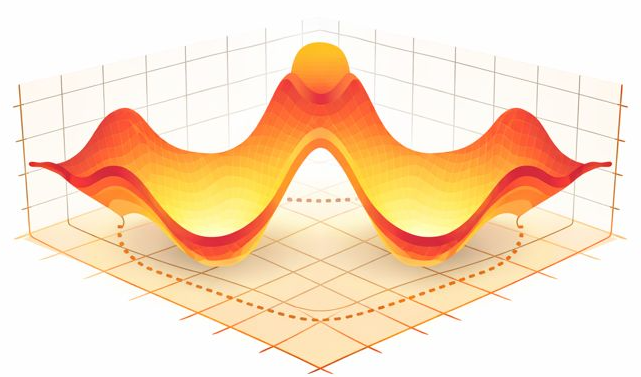
By linking statistical mechanics with molecular simulations, we connect microscopic configurations to macroscopic thermodynamic observables, supporting the growing use of molecular modelling in chemical and biochemical engineering Burcham et al., 2024. We show how FESs can be utilized to map equilibrium probabilities into interpretable representations of stability, and how their meaning depends on the choice of CVs that capture the essential transformation coordinates. Machine learning now enhances FES calculations by discovering CVs, optimizing biases, and learning mean forces while preserving thermodynamic consistency, providing exciting new research avenues and methodological improvements. The principles summarized here aim to equip readers with a transferable foundation for applying and advancing molecular simulation as a quantitative design tool in molecular and process engineering.
- Burcham, C. L., Doherty, M. F., Peters, B. G., Price, S. L., Salvalaglio, M., Reutzel-Edens, S. M., Price, L. S., Addula, R. K. R., Francia, N., Khanna, V., & Zhao, Y. (2024). Pharmaceutical Digital Design: From Chemical Structure through Crystal Polymorph to Conceptual Crystallization Process. Cryst. Growth Des., 24(13), 5417–5438. 10.1021/acs.cgd.3c01390